Synopsis
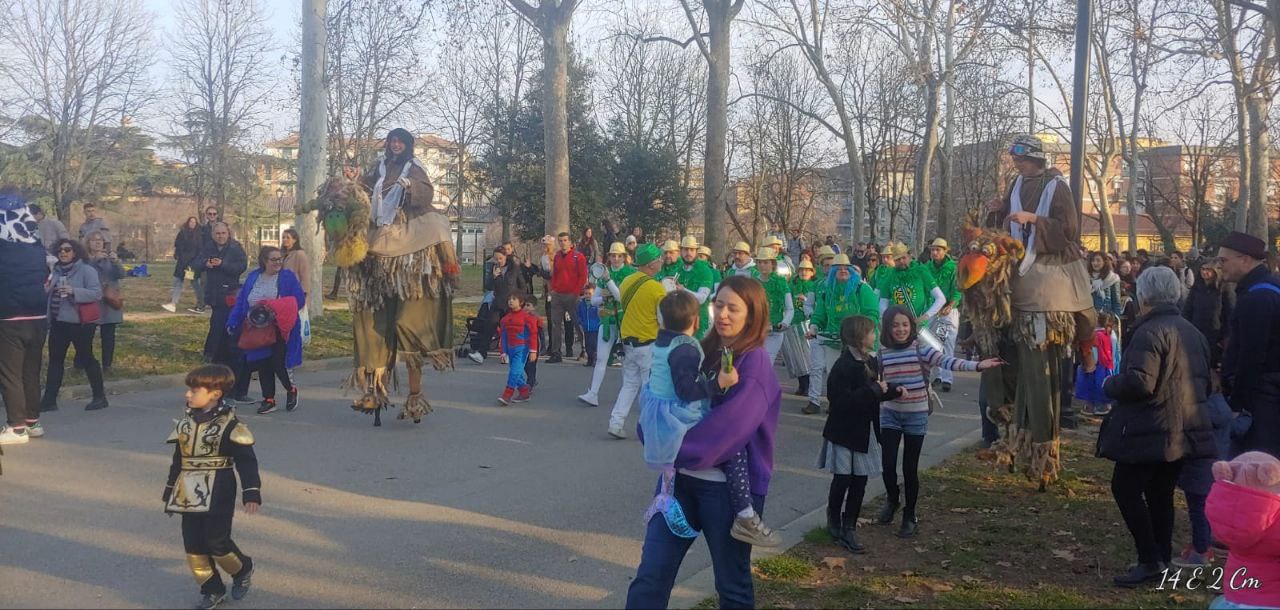
A traveling performance on stilts featuring live music, juggling, and fire (optional). Through nonverbal communication and physical theater, the show tells an engaging story that takes the audience on an exciting journey, transforming the urban space into an open-air stage where every corner becomes an opportunity for wonder and amazement.
History
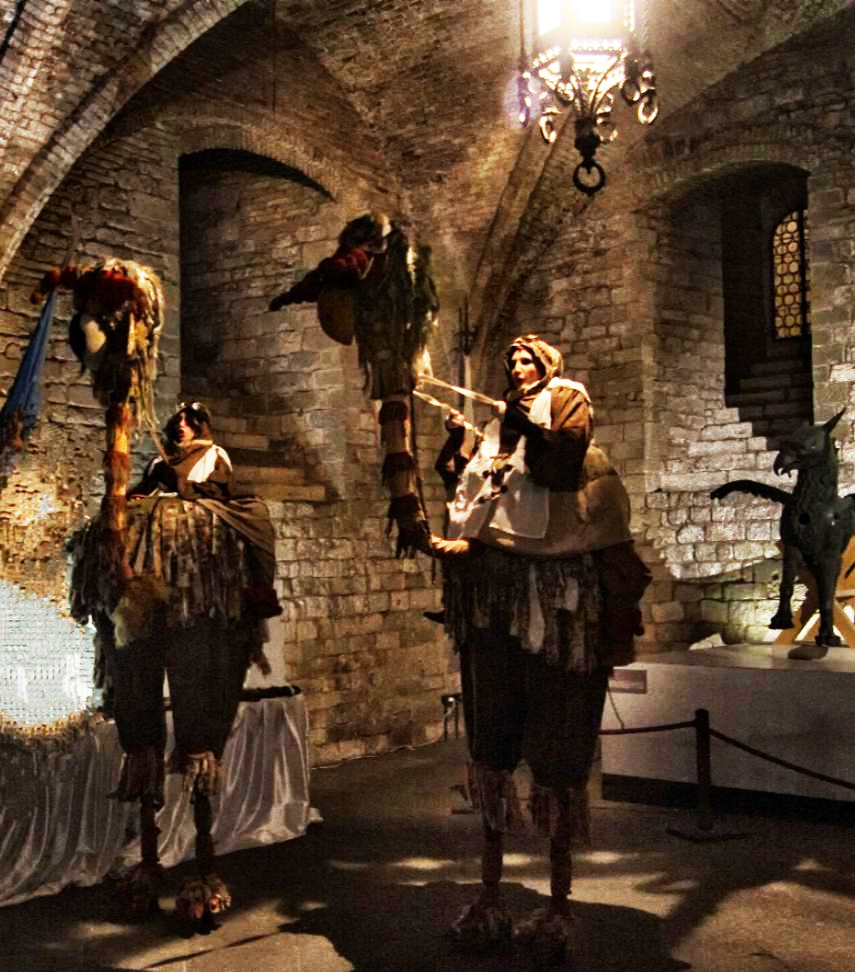
The costumes of the sgruzzi, designed and crafted by Monica Bellei, come to life and tell a story that originates from a place so far away that its name is lost to us—a distant place where one risks getting lost. The sgruzzi are creatures that are, in their own way, rebellious yet generous, attentive and gentle.
In the beginning were the fears of the knights born from dragon’s teeth sown after the storm that swept across the sea of mist during the age of heroes, when in Boeotia King Cadmus went in search of his sister Europa, abducted by Zeus and still missing to this day. The fears turned into hard, invisible eggs which, on a blindingly sunny day, thanks to every musician who passed by, hatched, and those we now call sgruzzi were born, screaming without a voice.
They cannot be classified into a single species: eagle’s talons, griffin’s body, owl’s beak, giraffe’s neck, moon goat’s ears. Fantastic animals on the verge of extinction, the sgruzzi are a protected species, always accompanied by a personal tamer and one or more musicians. All those fortunate enough to witness the sgruzzi exhibition learn their habits and how to interact with them with kindness and respect. It is ensured that no human or animal sacrifices will take place. The sgruzzi will compete in skill contests, and an extraordinary winner will be declared, receiving a crown of white flowers as a prize. Those who ride the sgruzzi wish to marry but are never able to do so because of the animals’ jealousy. Misunderstandings arise, and they choose to go their separate ways, but the trainer and the music always manage to remind them of the importance of staying together and respecting differences.
Director’s Notes and Style
• Direct audience participation, with the audience becoming an active part of the show.
• Use of live music or a traveling soundtrack (clarinet, acoustic instruments).
• Elements of juggling, mime, clowning, puppetry, and urban dance.
• Colorful costumes and mobile sets that are easily transportable during the parade.
• Minimal dialogue, relying primarily on gestures and improvisation.
Organizational Notes
• The show is suitable for festivals, outdoor events, cultural gatherings, and town festivals.
• The show can be tailored to various themes (environmental, historical, fairy tales, private events) upon request.
• Language: primarily non-verbal, understandable to everyone, including foreigners and children.